
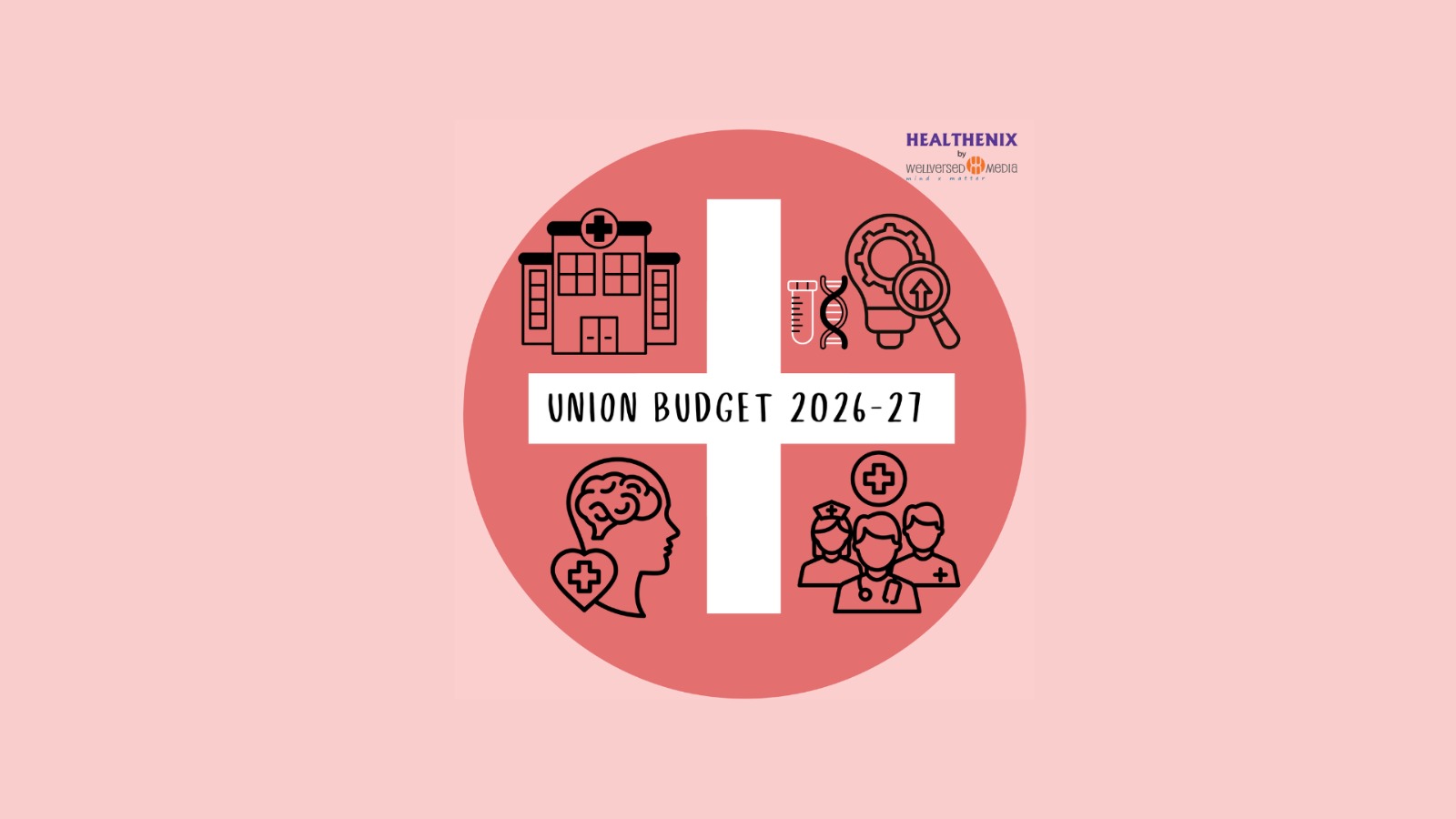
Union Budget 2026-27 signals a refreshingly renewed focus on healthcare development and expansion, in the journey toward attaining the goal of Viksit Bharat @2047
By Rajiv Raghunath
“It is health that is real wealth and not pieces of gold and silver.” — Mahatma Gandhi, in an article published in February 1935.
Today, as India takes bold steps to attain the developed country status by 2047, it is exceedingly important for the nation to redouble the efforts to ensure quality healthcare for all and thereby raise the health and wellness standards of people across all ages and social strata. In this context, the Union Budget 2026-27, presented by Finance Minister Nirmala Sitharaman in the Lok Sabha on February 1, reaffirms the Government’s commitment to bolster the healthcare ecosystem.
With an allocation of ₹1,06,530.42 crore to the Ministry of Health and Family Welfare, Government of India has the importance of healthcare in India’s priorities. The figure is not just substantial. It represents nearly a 10% increase over last year’s revised estimates and a cumulative growth of more than 194% compared to the health budget of 2014-15. In real terms, this means an additional ₹70,349.75 crore invested in public health over the last twelve years.
Clearly, healthcare is no longer being treated as an afterthought. It is being positioned as a core pillar of national development. But the real question is not how much is being spent, but whether this spending is moving in the right direction.
Fixing the Foundation
A hugely encouraging aspect of this Budget is the focus on strengthening the basics. Major national programmes have received meaningful support.
- Pradhan Mantri Jan Arogya Yojana provisioning now stands at ₹9,500 crore, aimed at widening health insurance coverage and improving hospital networks.
- National Health Mission allocation has risen to ₹39,390 crore, supporting primary healthcare and disease control across the country.
- PM Ayushman Bharat Health Infrastructure Mission has seen a 67.66% jump to ₹4,770 crore, focused on district hospitals, critical care, and public health laboratories.
These initiatives strengthen the backbone of India’s public health system. They bring healthcare closer to communities and ensure that essential services reach people in a more reliable and effective manner.
The Budget also pushes hard on medical infrastructure and education. New AIIMS institutions, more MBBS and postgraduate seats, and upgraded super-specialty centres are part of a long-term plan to expand medical capacity. Under the Pradhan Mantri Swasthya Suraksha Yojana alone, ₹11,307 crore has been allocated for new hospitals and college upgrades.
In simple terms, the government is trying to build a stronger health system brick by brick.
Healthcare is About People
Another thoughtful aspect of the Budget is its focus on human resources. India’s healthcare challenges have never been only about buildings and equipment. They have always been about trained professionals.
Recognising this, the Budget proposes a ₹980 crore plan to expand allied healthcare education. The goal is to create nearly one lakh skilled allied health professionals and train 1.5 lakh geriatric caregivers over the next five years. This is a timely response to India’s changing demographic needs.
As the population ages and chronic diseases rise, the demand for nurses, technicians, therapists, and caregivers will inevitably grow. Preparing this workforce today is essential for a resilient healthcare system tomorrow.
The allocation for Human Resources for Health and Medical Education has also increased to ₹1,725 crore, strengthening the pipeline of doctors and nurses. Funding for the Ayushman Bharat Digital Mission has risen to ₹350 crore to expand telemedicine and digital health records.
Taken together, these measures show that real healthcare transformation depends not only on money, but also on skilled people and efficient systems.
A Bold Bet on Innovation
The most forward-looking announcement is the launch of Bio Pharma Shakti with an outlay of ₹10,000 crore over five years. The objective is to move India beyond generics and build global leadership in biologics and advanced therapies.
Plans to establish three new National Institute of Pharmaceutical Education and Research (NIPER) institutes, upgrade seven existing ones, create 1,000 accredited clinical trial sites, and strengthen the drug regulatory framework reflect a serious attempt to build an innovation ecosystem.
From a patient perspective, customs duty exemption on 17 cancer drugs and seven rare disease medicines is another important step to reduce treatment costs. These initiatives signal a long-term approach that combines scientific capability with patient welfare.
Areas That Need Continued Focus
While the Budget makes strong commitments, primary healthcare and preventive medicine still require greater attention. India’s vast needs remind us that strong local health centres remain as important as advanced urban hospitals.
Effective implementation will also be crucial. Health delivery depends heavily on states, and close coordination will be essential to convert allocations into visible improvements.
Affordability remains an ongoing area of focus. Duty exemptions provide relief, but broader access to advanced treatments will require continued efforts in insurance coverage, pricing mechanisms, and domestic capacity building.
These are not shortcomings, but opportunities to strengthen India’s healthcare journey further.
On Balance
Budget 2026-27 reflects a structured and measurable shift in India’s healthcare priorities. The nearly 10% rise in allocation to ₹1,06,530.42 crore, along with a cumulative increase of over 194% since 2014-15, signals sustained commitment to public health. Targeted boosts, including a 67.66% increase for the Ayushman Bharat Health Infrastructure Mission and ₹39,390 crore for the National Health Mission, strengthen primary care and district-level infrastructure.
At the same time, long-term capacity building is evident through ₹10,000 crore for Bio Pharma Shakti, ₹980 crore for allied health education, and ₹1,725 crore for medical human resources. These allocations aim to balance immediate service delivery with future readiness.
The real test will be outcomes. Improved hospitals, expanded workforce, effective digital systems, and wider access to medicines will determine whether these investments translate into meaningful change on the ground.
Your Turn!
What are your thoughts on this year’s healthcare priorities?
Do you see these allocations translating into meaningful change on the ground?
I look forward to hearing perspectives from healthcare professionals, policymakers, and industry leaders. Let’s keep the conversation going.