

We often find that modern life is at odds with good health. Many of us spend hours living a sedentary life -whether at work, in front of screens, or simply relaxing on the couch. If we combine this with chronic stress and an energy-dense diet, we would have gathered a pool of healthcare challenges like high blood pressure, obesity, high cholesterol, and more. These lifestyle factors are now becoming some of the leading causes of chronic diseases and even life-threatening complications.
Yet, the real obstacle to become healthy is not always physical—it’s more mental. For instance, when faced with the choice between exercising and watching a Netflix series, most of us instinctively choose the latter. For those who are just starting on their wellness journey, finding the motivation to stay consistent can feel challenging.
This is where gamification comes into play—an approach that combines healthcare management with the engaging elements of games. Gamification is used as a process to design games that can captivate, motivate and keep players hooked with rewards, challenges, and a sense of achievement.
MENTAL DRIVES OF GAMIFICATION
Intrinsic motivation is often found to be the force that drives people to engage in activities because they are satisfying and they fulfil basic psychological needs like autonomy, competence, and relatedness. When people feel autonomous, competent, and connected, they’re more likely to willingly embrace healthier behaviours. This idea, rooted in Self-Determination Theory (SDT), has become a fundamental framework for understanding and designing modern health interventions.
Figure 1: Describing the contrast between how individuals feel when driven by intrinsic versus extrinsic motivation
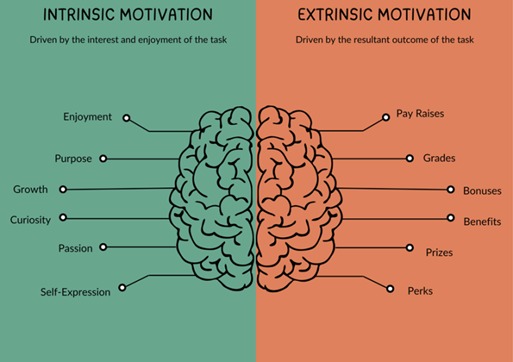
Unlike extrinsic motivation where actions are driven by rewards or avoiding punishments, intrinsic motivation fosters behaviours that are not only sustainable but contribute to overall wellbeing. Extrinsic motivators, such as rewards or external pressure, can often feel forced and weaken autonomy, creating tension rather than empowerment. In contrast, intrinsically motivated behaviour contributes directly to mental and social well-being by satisfying psychological needs and is also more sustainable.
THE FIGURES DRIVING THE GAMES:
The global gamification market is growing fast. Between 2022 and 2023, it expanded from $14.87 billion to $18.63 billion—an impressive 25.3% jump in just one year. Experts predict this growth will continue, with the market expected to reach $46.44 billion by 2027, growing at a steady rate of 25.6% each year.
So, what’s driving this boom? Businesses are realizing that gamification—adding game-like elements like rewards, challenges, and social features—can turn ordinary interactions into engaging experiences. And the results speak for themselves:
Figure 2: Showing statistics on the impact of Gamification on business outcomes
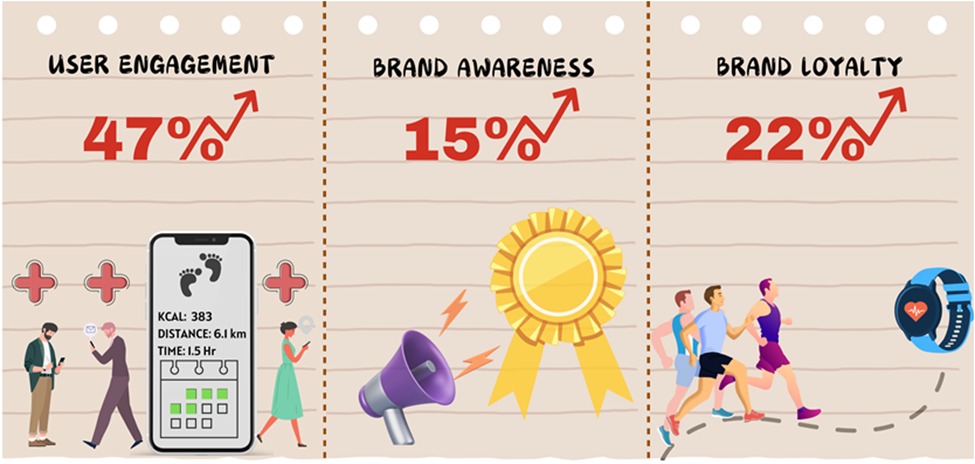
The reason is simple: people respond better when something feels fun, rewarding, and interactive. Customers who form emotional connections with brands also tend to stick around longer and contribute more value over time. Devoted customers have also been found to spend three times more than average customers.
But it’s not just about customers. Gamification is also helping businesses understand their audience better. By tracking behaviors and performance, companies get clear insights into what works and what doesn’t. This data helps them make smarter decisions and meet their goals more effectively.
Whether it’s improving customer loyalty or boosting employee performance, gamification is proving to be a powerful tool. As competition grows, businesses that find creative ways to engage people are coming out ahead. And with numbers like these, the gamification trend is only just getting started.
HOW GAME DESIGN WORKS:
Gamification is changing the way we approach health, making it more engaging and easier to manage. With smartphones and fitness trackers now part of daily life, adding game-like elements to health routines is simpler than ever. Apps like Fitbit reward users with badges and milestones for meeting goals, turning activities like step counting into fun challenges.
What makes gamification stand out is its versatility. It’s being used for everything from managing chronic conditions to boosting mental well-being. For example, MySugr helps people with diabetes track their blood sugar by turning it into an interactive game. Similarly, rehabilitation apps guide patients through recovery exercises in an engaging, structured way.
Figure 3: Showing the elements that boost engagement and interactivity in gamified health apps
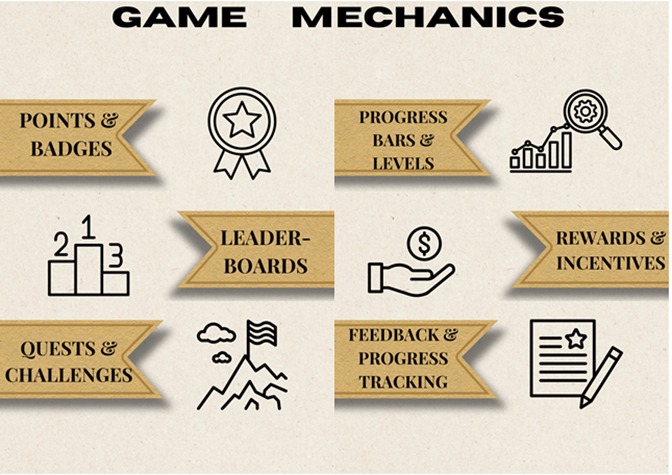
These tools also fit naturally into daily routines. Unlike traditional health games that require extra time or effort, gamified systems work in the background. Take Zombies, Run!, for instance—it turns regular runs into exciting missions, motivating users to keep going while adding an element of fun.
More than just tracking progress, gamification also supports overall well-being. Apps like SuperBetter help users deal with stress and anxiety through simple tasks, encouraging a sense of accomplishment and connection. By tapping into basic needs like feeling capable, in control, and connected to others, these tools make health goals feel more rewarding.
THE EXECUTION ROADBLOCKS:
Health games have tremendous potential, but high production costs and design complexities remain major hurdles. Unlike entertainment games, health-focused games are often tailored to specific behaviors or target groups, making them costly to develop. Smaller organizations and initiatives often struggle to create engaging health games that stand out in a competitive digital market.
Another challenge is accessibility. Many health games require dedicated devices, like gaming consoles, and demand users set aside specific time and space to play. But people lead busy lives with unpredictable schedules, and not everyone has access to expensive gaming technology. This disconnect between the design of health games and real-world user needs limits their reach and impact.
However, as technology advances, these barriers are becoming easier to address. By focusing on platforms people already use—like smartphones and wearable fitness trackers—health games can become more accessible and practical. For instance, mobile apps that integrate gamified health interventions can fit seamlessly into daily life, tracking habits, providing reminders, and offering rewards in real time.
The key to overcoming these challenges lies in creating affordable, accessible games that align with users’ routines. With the right approach, health gamification has the potential to break through these obstacles and make a meaningful difference in improving well-being for people everywhere.
GAMIFICATION’S SCOPE AND SIGNIFICANCE
One of the biggest advantages of gamification in healthcare is its ability to generate valuable patient data. Gamified apps encourage users to engage and share feedback naturally through their interactions. This builds a rich pool of data that businesses and healthcare providers can analyze to identify trends, improve products, and enhance services. The more engaged users are, the more useful these insights become, driving innovation in healthcare solutions.
However, successful gamification requires balance. Health apps must engage users without encouraging unhealthy habits or addiction. Challenges should be rewarding yet achievable, keeping users motivated without overwhelming them. Adding emerging technologies like IoT, 3D visuals, and augmented reality (AR) can also elevate the experience, making apps more interactive, innovative, and appealing.
While the road to creating effective and widely available health games is not simple, thoughtful design and smart use of technology can make a big difference. By blending fun, functionality, and user-friendly innovation, gamified tools can play a key role in promoting healthier lifestyles in a sustainable and engaging way.
0 Comments
This is exactly what i was looking for, thank you so much for these tutorials
It would be great to try this theme for my businesses
What a nice article. It keeps me reading more and more!